
Service
ABA at our centers
Some children do better away from home distractions, and some skills (waiting your turn, coping with a busy room) are easier to practice somewhere set up for them.
- (951) 440-6220
- Serving the Inland Empire
- BCBA-led care
- HIPAA-compliant
- In-network with major plans
- Telehealth available
- Se habla español
Who this is for
If this sounds like your family, this is the right page.
Good for children preparing for a classroom, and for families whose home is too busy for focused work.
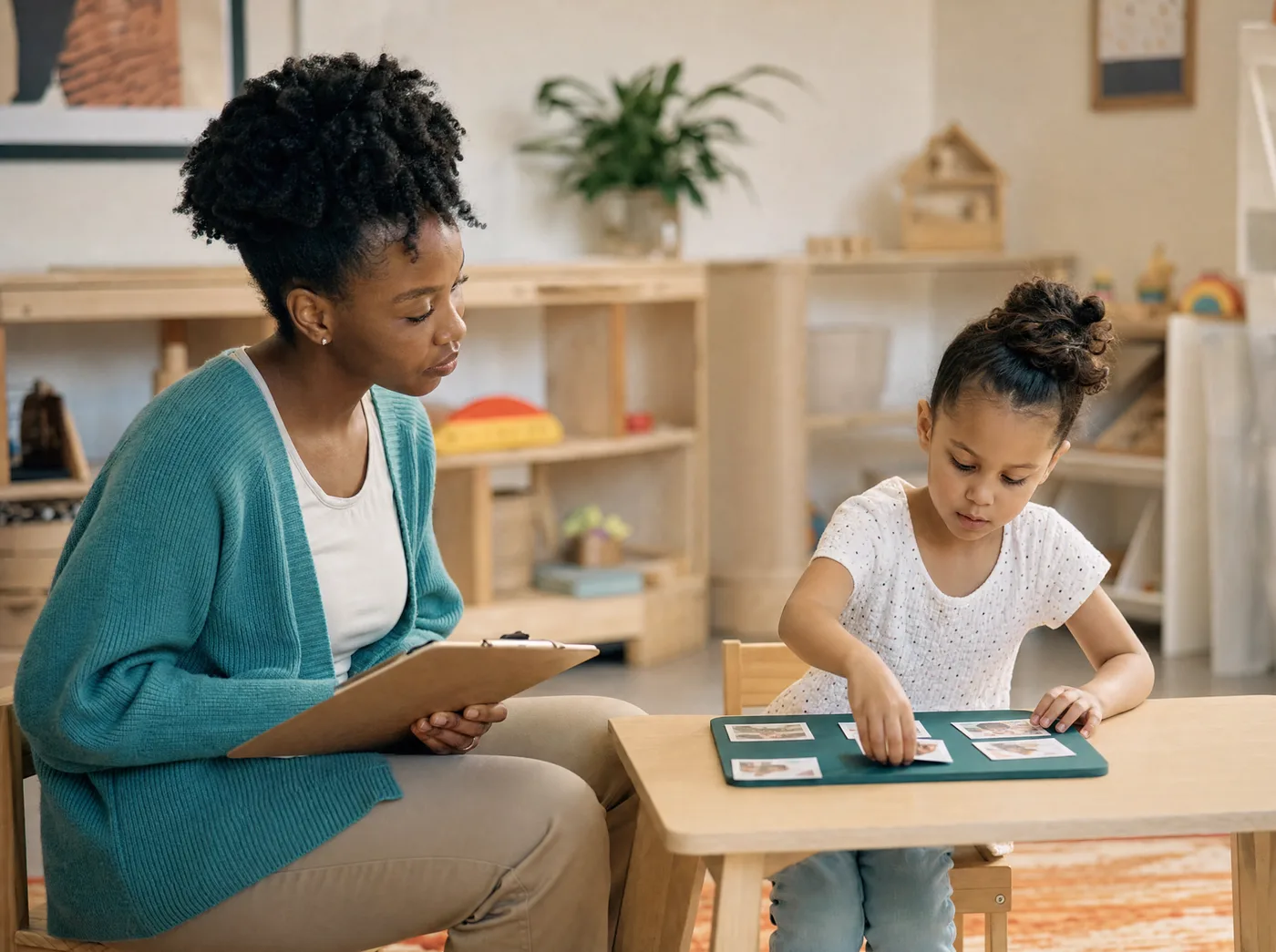
What it actually looks like
What an ordinary week tends to involve.
- A dedicated therapy room with materials on hand
- Practice being around other children, when that is a goal
- Easier scheduling around school hours
- You take part in sessions and learn the same strategies we use
How it works
ABA at our centers
Some things cannot be practiced at home, because home does not have them. Waiting your turn needs someone to wait behind. Handling noise needs noise. Coping when a friend takes the toy needs a friend who takes the toy.
Our therapy rooms are built for that. We can adjust what's around your child, with fewer distractions for children who need to focus and more going on for children who are ready for it.
A typical visit
Your child works one to one with a Behavior Technician for most of the session. Most of what we teach happens through play, because a child who is not enjoying the session is not learning much from it. To your child, it feels like time with someone fun. Behind every game is a goal we're working on.
Who is responsible for the plan
Your Clinical Manager is a BCBA, a Board Certified Behavior Analyst, who writes the plan and owns it. They set the goals, read what comes back from each session, and change the plan when the record says a goal has stopped moving.
Your Clinical Manager will not be in the room for every session. Instead, every session's data feeds into graphs they review, which show them week by week whether the plan is working, and they observe the work regularly. The technician in the room with your child is trained and supervised to run the plan the same way every time.
You stay, and that is the point
A parent or guardian stays for the session, here as much as at home, or an approved caregiver over 18 in your place. We will show you what we are doing and why as it happens.
If your child works better with you out of their eyeline for part of it, we will find you a spot where you can still see and hear. What we will not do is send you home not knowing what happened.
Why families combine it with home visits
The center is where a skill is built. Home is where it has to survive. Many families do both, so a skill gets practiced in both places from the start. We change that mix whenever it stops making sense.
Your first few weeks
So you know what is coming, and when.
Short sessions first
We often start at an hour, not three. We would rather end while your child is still happy than push to the full time and lose next week.
Building up the room
We add noise, people and waiting on purpose and in order, once your child can handle the quiet version. The steps are written down before we take them.
Taking it home
Once a skill is solid in the room, we plan how it moves to your house. That plan involves you, and it is written into the goal from the start.
A good fit if
- Your child's goals involve other children, waiting, or handling a busy place.
- Home doesn't have the space or quiet for sessions to work well right now.
- You want a clear line between therapy time and home life.
This may not be the right starting point if
- No caregiver can stay for the full session.
- The goals that matter most to you are all tied to home routines.
If that sounds like your family, say so on the first call and we will point you towards something that fits better.
Questions parents ask
Questions parents ask
Can I watch the session?
Yes. There is nothing happening in that room we would not want you to see. If your child performs differently when you are visible, we will talk about it rather than shut the door on you.
How far is it, and is parking free?
We have centers in Riverside and Desert Hot Springs. Parking is free at both. If the drive is the barrier, say so. In-home therapy may fit your family better.
What if my child gets upset and we have to leave?
Then you leave. Nobody will make you stay, and it does not count against you. We will look at what happened and change how the next visit starts.
Will my child be with other children?
Only when that is a goal in their plan. Most center work is one to one. Group time is added on purpose, not because the room happened to be busy.
en
Other ways we help
Most families use more than one of these, often at the same time.

Want to talk it through?
Call and we will tell you whether this is the right fit, including if the answer is no.
HIPAA-compliant Telehealth available