
Service
ABA at home
Your technician comes to your home on a schedule that fits your family. Getting dressed, sitting at dinner, asking for help. These get learned in the rooms where they actually happen.
- (951) 440-6220
- Serving the Inland Empire
- BCBA-led care
- HIPAA-compliant
- In-network with major plans
- Telehealth available
- Se habla español
Who this is for
If this sounds like your family, this is the right page.
You want help with the moments that happen at home: mornings, meals, bedtime, bath time, leaving the house.
You want progress to show up in your family's everyday routines.
You want everyone who lives with your child learning the same strategies.
Getting to a center regularly is hard with your schedule.
You want your child learning with their own toys, space, and routines.
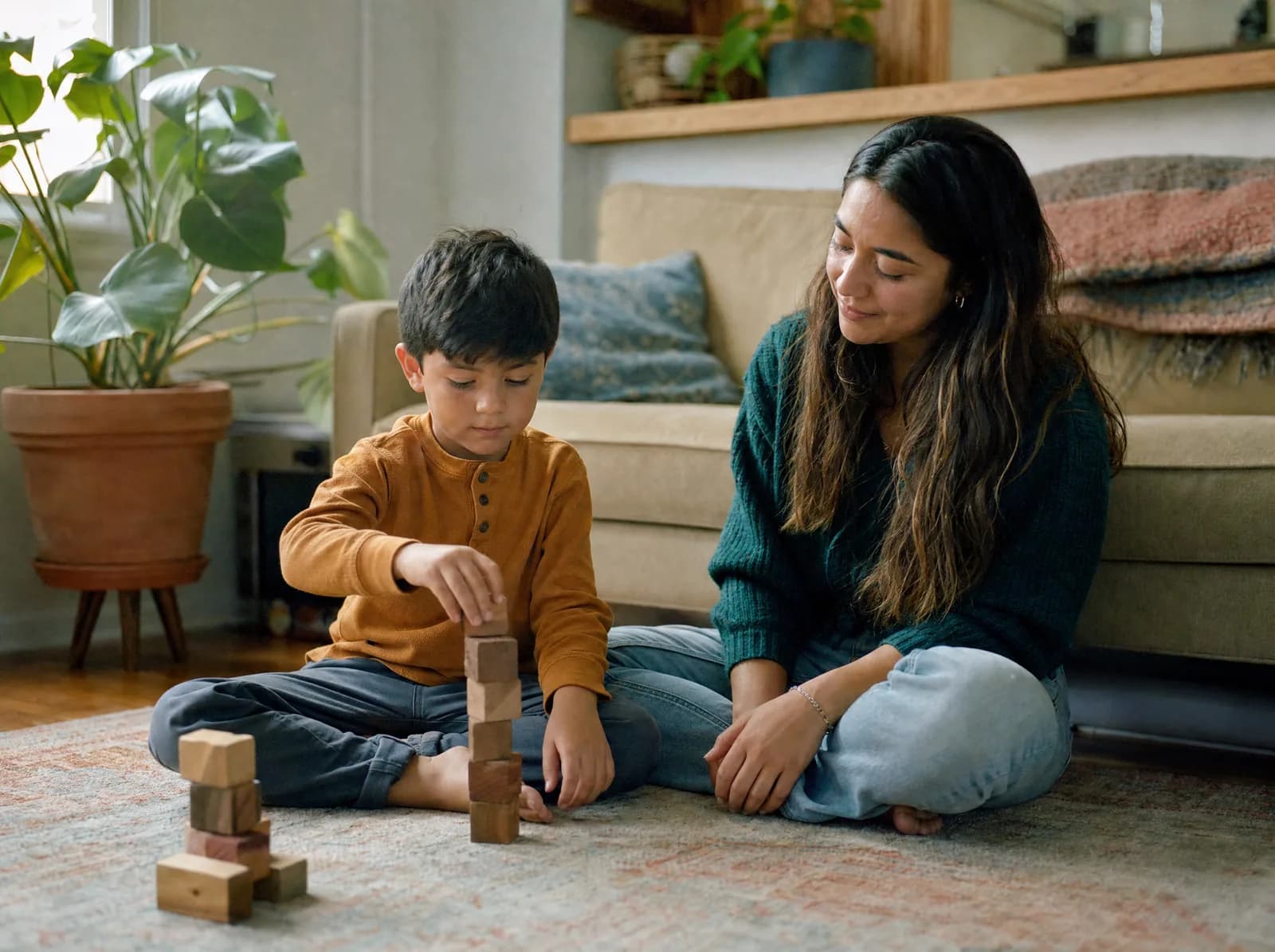
What it actually looks like
What an ordinary week tends to involve.
- Our trained team comes to your home, with every program overseen by a BCBA
- Sessions are scheduled around your family's routine
- We focus on the goals that matter most to your family right now
- You practice the strategies alongside our team
- Siblings and grandparents join in when it helps
- A quick recap with you at the end of every visit
How it works
ABA at home
A skill learned in a therapy room does not always come home with a child. That is not a failure of the child. It is how learning works. We all remember things better in the place we learned them.
So we work in the place where the skill has to happen. If mornings are the hard part, we try to schedule in the morning. If dinner is the hard part, we try to come at dinner. Your technician sits on your floor, uses your cups and your toys, and plays with your child in your rooms. Most of what we teach happens through play. To your child, it feels like time with someone fun. Behind every game is a goal we're working on.
Who comes to your house
A Behavior Technician, a trained therapist who runs each session and teaches through play, comes for most visits. We keep the same technician with your family wherever we can. When someone is sick or leaves, we tell you before the visit, not at your door.
Your Clinical Manager is a BCBA, a Board Certified Behavior Analyst with a graduate degree. They write and oversee your child's plan, review the data from each session, observe the work in person or by telehealth, and change the plan when a goal has stalled. How often they observe depends on your child's needs.
Your Assistant Clinical Manager assists the BCBA and gives the technician frequent support. Either your Clinical Manager or Assistant Clinical Manager can meet with you to go over progress.
What we write down
Every session is recorded in our data collection system. It tracks what we asked for, what your child did, and how much help it took. That sounds cold on paper. In practice it means we can tell you within weeks whether the plan is moving, instead of guessing for months.
You can see your child's data anytime through the parent access in our system. If you'd like help reading it, your Clinical Manager or Assistant Clinical Manager will walk you through it.
How long a visit lasts
Most in-home visits run two to four hours. Some families have two visits a week, some have five. The number of hours is based on your child's assessment and what your health plan approves.
Hours matter. Research shows children tend to make more progress when they receive more hours of therapy over a longer period of time (Linstead et al., 2017). That is why showing up for every scheduled session counts.
Your first few weeks
So you know what is coming, and when.
At first, we mostly play
The first visits are about your child liking the person who walks in. We ask for almost nothing. If your child hides, that is fine, and we expect it.
Then we watch your routines
We sit through the hard parts of your day to see what actually happens before we change anything.
Next, we start with what matters most
We choose the first goals together, combining what matters most to your family with what our assessment shows your child needs. Then we break them into small steps and track progress at every session.
Then we look at the data together
Your clinical manager meets with you regularly to go over your child's progress data. If a goal isn't moving, we adjust the plan together.
A good fit if
- You want help with the moments that happen at home: mornings, meals, bedtime, bath time, leaving the house.
- You want progress to show up in your family's everyday routines.
- You want everyone who lives with your child learning the same strategies.
- Getting to a center regularly is hard with your schedule.
- You want your child learning with their own toys, space, and routines.
This may not be the right starting point if
- No caregiver can be home and take part during sessions.
If that sounds like your family, say so on the first call and we will point you towards something that fits better.
Questions parents ask
Questions parents ask
Does my house need to be tidy?
No. We have worked in every kind of home. We need a spot to sit, somewhere your child likes to be, and whatever materials the plan calls for. Tidy is not on the list.
Do I have to be there the whole time?
Yes. A parent or guardian over 18 stays for the whole session, or an approved caregiver in your place. That is not us being strict about attendance. You are the person who uses these steps for the other twenty-three hours of the day, and most of what your technician learns in a session is only useful once you have seen it.
What if my child has a hard time when the technician arrives?
That is normal for the first few weeks, and it is information, not a setback. We slow down and let your child set the pace. If it is still hard after a month, the BCBA changes how visits start.
We have a dog. Is that a problem?
Not at all, but we do ask that pets are secured before we arrive and stay secured for the whole session, in another room, a crate, or outside away from where we are working. Our staff do not handle or play with pets. Tell us if yours has ever snapped at anyone, and we will plan around it rather than find out the hard way.
Can siblings join in?
Often yes, and it usually helps. Brothers and sisters are the people your child practises with the most. We will tell you when a sibling should sit one out.
en
Other ways we help
Most families use more than one of these, often at the same time.
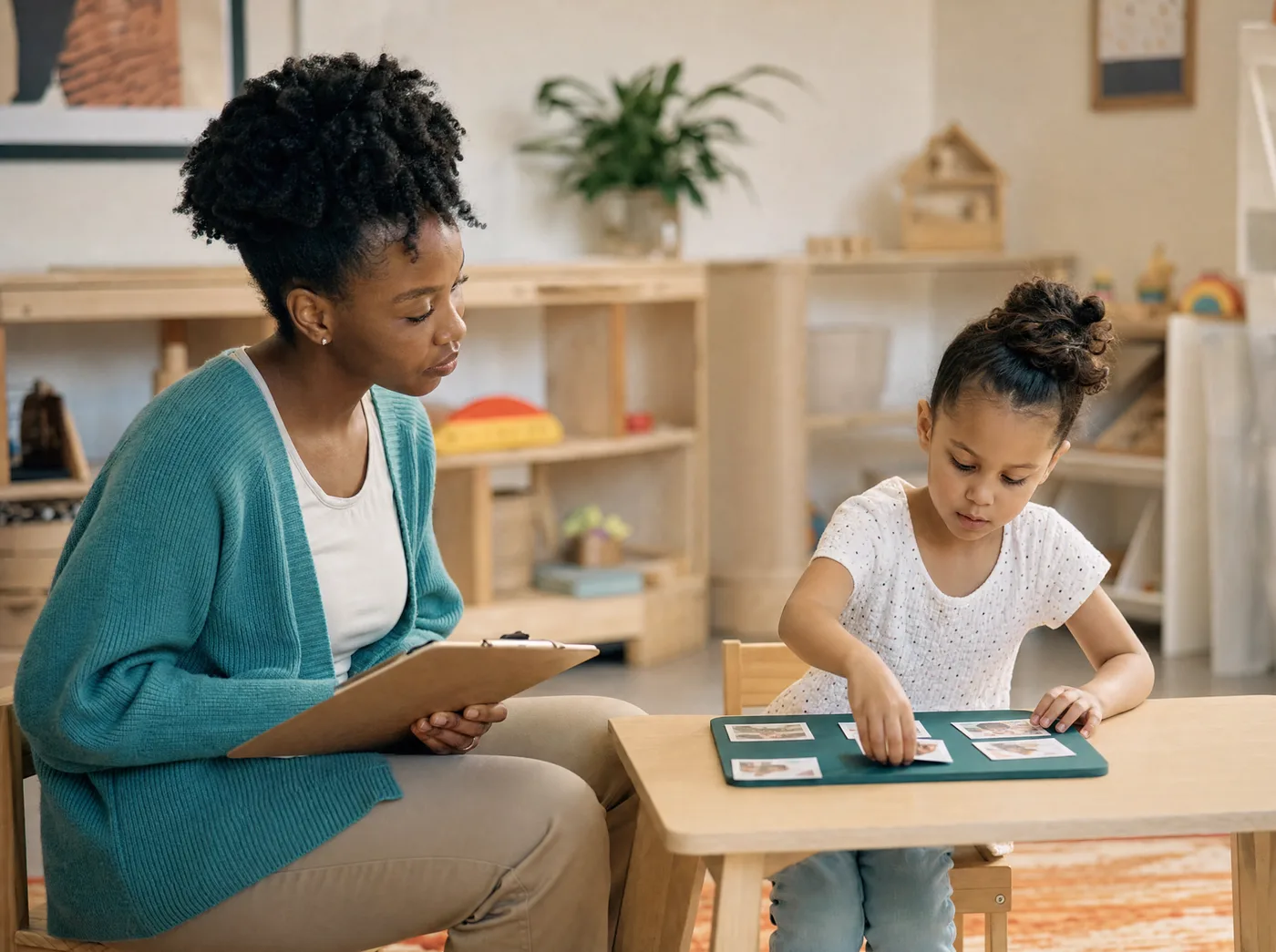 ABA at our centersA room built for it, in Riverside or Desert Hot Springs.Read more
 Social skills groupsPracticing with other kids, because that is where it counts.Read more
 Parent Connection AcademyYour child is with a therapist a few hours a week and with you for the rest. The Academy is for the rest.Read more
Want to talk it through?
Call and we will tell you whether this is the right fit, including if the answer is no.
HIPAA-compliant Telehealth available