
Resource
Teaching your child to ask instead of grab
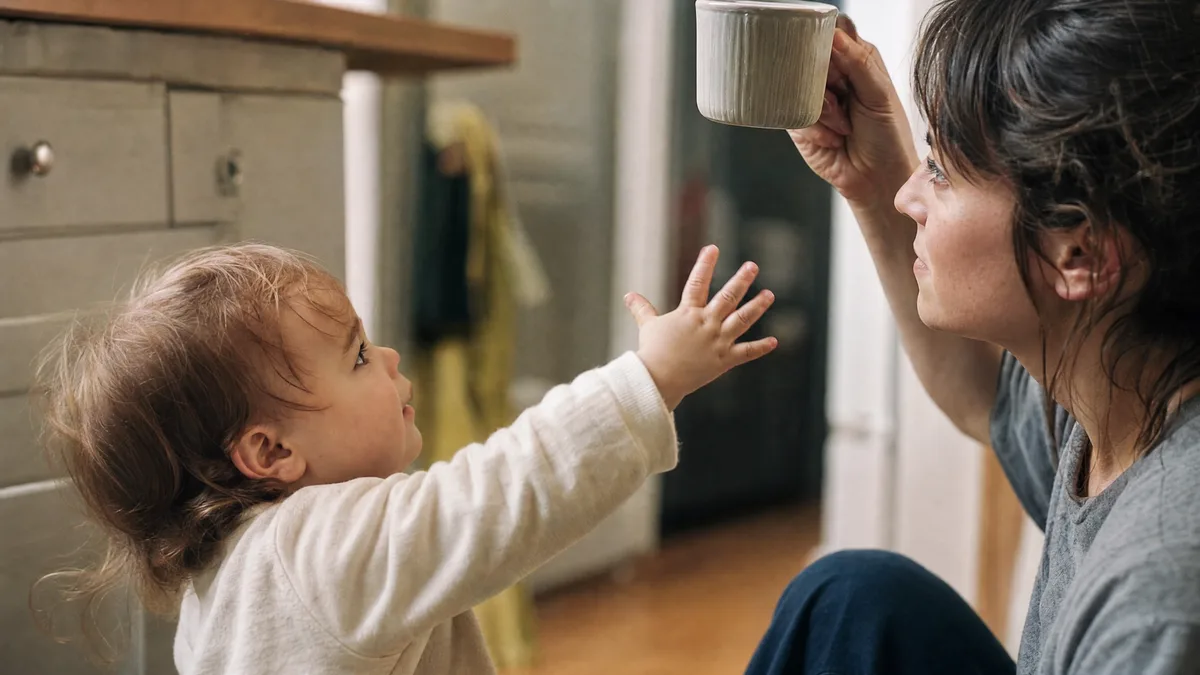
Grabbing is communication that works. The job is to make asking work better.
- For parents
- 5 min read
- Updated September 25, 2026
The short answer
Make asking work better than grabbing. Practice with something your child really wants. Accept a small ask they can already do, like a word, a sign, a sound or a picture. Hold the item and wait a full five seconds without prompting. When they ask, hand it over right away. If they grab, block gently, wait, and prompt.
Key takeaways
- Grabbing is communication that has worked so far.
- Any clear request counts: a word, a sign, a picture or a look.
- Wait five full seconds before you prompt.
- Speech, signs, pictures and devices are all real ways to ask.
A child who grabs is not being rude. They are using the method that has worked so far. Grabbing is fast and it is reliable, and until asking is faster and more reliable, grabbing wins.
So the job is not to stop the grabbing. It is to make asking the better deal.
Start with something they actually want
Do not practise on socks. Practise on the thing your child would cross a room for. Motivation is not a nice extra here, it is the whole engine.
Keep the ask small
The ask has to be something your child can already do, or nearly. That might be a word, a sound, a sign, a picture handed to you, or a look towards you. It does not have to be a sentence. "Juice" is a complete request.
If you are not sure what counts, ask your BCBA to write down the exact target. Everyone in the house should be accepting the same thing, or it stops being clear.
The five second rule
Hold the item. Wait five full seconds. Count them in your head, because five seconds feels much longer than it is and most adults wait about two.
That silence is where the asking happens. If you fill it with "say juice, say juice, say juice", your child learns to wait for the prompt instead of starting on their own.
When they ask, be fast
Hand it over straight away. Not after one more try, not after a better version. Speed is what makes asking beat grabbing.
You can shape it later. First, asking has to work.
When they grab
Stay calm and boring. Block it gently, wait, and give a small prompt. Then hand the item over as soon as they ask.
There is no punishment step here. You are not trying to make grabbing unpleasant. You are trying to make asking obviously easier.
What progress looks like
Not a straight line. Expect a week where it seems to be working, then a week where it does not. Count how many times a day your child asks without a prompt. That number, over three or four weeks, is the real answer.
One honest note
Some children will always find speech hard, and asking may work best through a device, a picture book, or signs. None of those is a lesser outcome or a step on the way to speech. A child who can tell you what they want has the skill. How they tell you is not the point.
Questions people ask
What counts as asking?
Anything your child can already do, or nearly: a word, a sound, a sign, handing you a picture, or looking at you. It does not need to be a sentence. Everyone at home should accept the same thing.
Why wait five seconds before prompting?
That quiet moment is when your child can ask on their own. Most adults wait about two seconds and then prompt, so the child learns to wait for the prompt instead.
What if my child does not talk?
Asking can happen with signs, pictures, or a speech device. None of these is a lesser outcome. A child who can tell you what they want has the skill, however they tell you.
Should I punish grabbing?
No. Stay calm, block gently, wait, and give a small prompt. The aim is to make asking clearly easier, not to make grabbing unpleasant.
From the Data Driven Educators team
This is what working with us is like
Everything on this page is how we actually work: one change at a time, written down, kept or dropped on what the notes say. If you would like that applied to your own child rather than read about, the first call costs nothing.
Read next
Other things worth your time
 What reinforcement actually meansIt is not bribery, and it is not stickers. It is the one idea underneath everything else we do.Read more
 Getting out the door in the morningMornings go wrong in the same three places for most families. Here is how to find yours.Read more
 When your child melts down in a storeWhat to do in the moment, what to skip, and the four things to write down afterwards.Read more
Questions about this?
Call us and we will talk it through with you, free.
HIPAA-compliant Telehealth available