
Resource
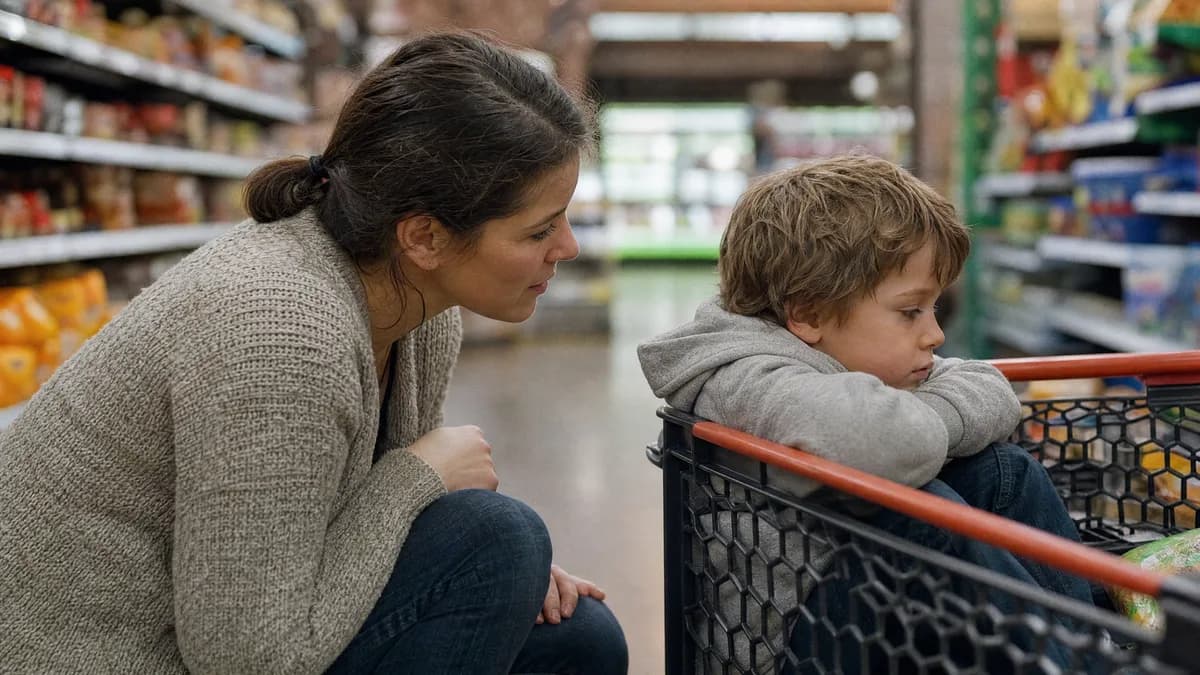
When your child melts down in a store
What to do in the moment, what to skip, and the four things to write down afterwards.
- For parents
- 5 min read
- Updated September 25, 2026
The short answer
In the moment, get smaller and quieter. Crouch down, say less, and name the feeling in a few words, like "Too loud in here." Wait for it to pass, and leave the store if you can. Don't buy the thing to stop it. Afterwards, write down the time, what came before, what your child did, and what happened next.
Key takeaways
- A meltdown is not bad behavior. It happens when a moment asks for more than your child has right then.
- Say less, name the feeling, and wait. Talking through the peak usually makes it longer.
- Buying the item stops it today, but it teaches that a meltdown works.
- Three or four written notes show a pattern faster than advice does.
A meltdown in public is hard for two reasons. Your child is having an awful time, and you feel watched. The watching is not yours to fix today. This page is about the first part.
What a meltdown is telling you
A meltdown is not bad behaviour. It is what happens when a moment asks for more than your child has available right then. A store is loud and bright and crowded, and it is full of things they want and cannot have. That is a lot at once.
Almost every meltdown is asking for one of four things:
- to get something
- to get out of something
- to get attention
- because something feels good or bad in their body
You do not have to work out which one while it is happening. You only have to notice, and write it down after.
In the moment
Get smaller and quieter, not bigger and louder. Crouch down. Say less. Long sentences do not land when a child is flooded.
Name it in three words. "You want gum." "Too loud in here." Naming a feeling is not giving in to it. It tells your child you understood.
Wait. Most meltdowns rise, peak, and come down on their own. Talking through the peak usually stretches it out.
Leave if you can. Walking to the car is not losing. It removes the thing that is causing the trouble.
What to skip
Do not start a lesson mid meltdown. Nobody learns while flooded, adults included.
Do not buy the thing to stop the noise. It works today. It also teaches that a meltdown is how you get gum, and next week will be louder.
After, once everyone is calm
Write down four things while you still remember them:
- What time it was
- What happened right before
- What your child did
- What happened next
Three or four of these notes will show you a pattern faster than any advice will. Bring them to your BCBA, the Board Certified Behavior Analyst who writes your child's plan.
Next week
Pick one small change from what your notes show you. If it is always the checkout line, try shopping straight after a snack. If it is the cereal aisle, try letting your child choose one thing at the start, so there is a yes somewhere in the trip.
One change at a time. Give it two weeks before you decide it did not help.
Questions people ask
Why does my child melt down in stores?
Stores are loud, bright and crowded, and full of things your child wants and can't have. That is a lot at once. Most meltdowns are about getting something, getting out of something, getting attention, or how something feels in their body. You don't need to know which one in the moment.
Should I leave the store during a meltdown?
If you can, yes. Walking to the car is not losing. It takes your child away from what is causing the trouble.
Should I give my child what they want to stop the meltdown?
It usually works today, but it teaches that a meltdown is the way to get it, so the next one is often louder. Try to wait it out calmly instead.
What should I write down after a meltdown?
Four things: the time, what happened right before, what your child did, and what happened next. After three or four notes, share them with your child's BCBA, the Board Certified Behavior Analyst who writes the plan.
From the Data Driven Educators team
This is what working with us is like
Everything on this page is how we actually work: one change at a time, written down, kept or dropped on what the notes say. If you would like that applied to your own child rather than read about, the first call costs nothing.
Read next
Other things worth your time
 What reinforcement actually meansIt is not bribery, and it is not stickers. It is the one idea underneath everything else we do.Read more
 Teaching your child to ask instead of grabGrabbing is communication that works. The job is to make asking work better.Read more
 Getting out the door in the morningMornings go wrong in the same three places for most families. Here is how to find yours.Read more
Questions about this?
Call us and we will talk it through with you, free.
HIPAA-compliant Telehealth available